
Check Lawrence County's Owner Card
AssuranceWeb serves as the county's main current assessment search. Its parcel card ties OwnerName fields and mailing lines to parcel keys, legal text, tax district, values, exemptions, and tax data. Copy the full owner string exactly, along with the tax year and the date shown on the card.
| OwnerName1 / OwnerName2 | The roll's stored owner string |
|---|---|
| Mailing address | Tax-notice destination, not occupancy |
| PIN / parcel ID | Keys used to confirm the tract |
| Legal description | Text used to compare parcel and deed |
| Deed reference | Book and page leading to Probate |
| Tax year / source date | Context for how current the result is |
The assessment roll makes the best first check, because the Revenue Department maintains the ownership records. It is not final proof of title, though; the newest deed can be more recent, and a mailing address never proves who occupies the parcel.
Compare Lawrence Owner Systems
AssuranceWeb, KCS GIS, and the older Avalon tax portal answer different questions. The GIS layer stores Owner, PreviousOwner, DeedBook, DeedPage, LegalDescription, PIN, PPIN, PID, and ParcelID_Long fields. Avalon searches tax years, payments, accounts, parcels, and receipts. Its year menu offers 2020 and All Years. That choice is a filter, not an ownership cutoff. Match the full name, parcel keys, legal text, and deed reference, since a tax account helps with billing but cannot replace a parcel or deed identifier.
See Lawrence's Current Owner Search
Open Lawrence County AssuranceWeb before reviewing the captured search screen.
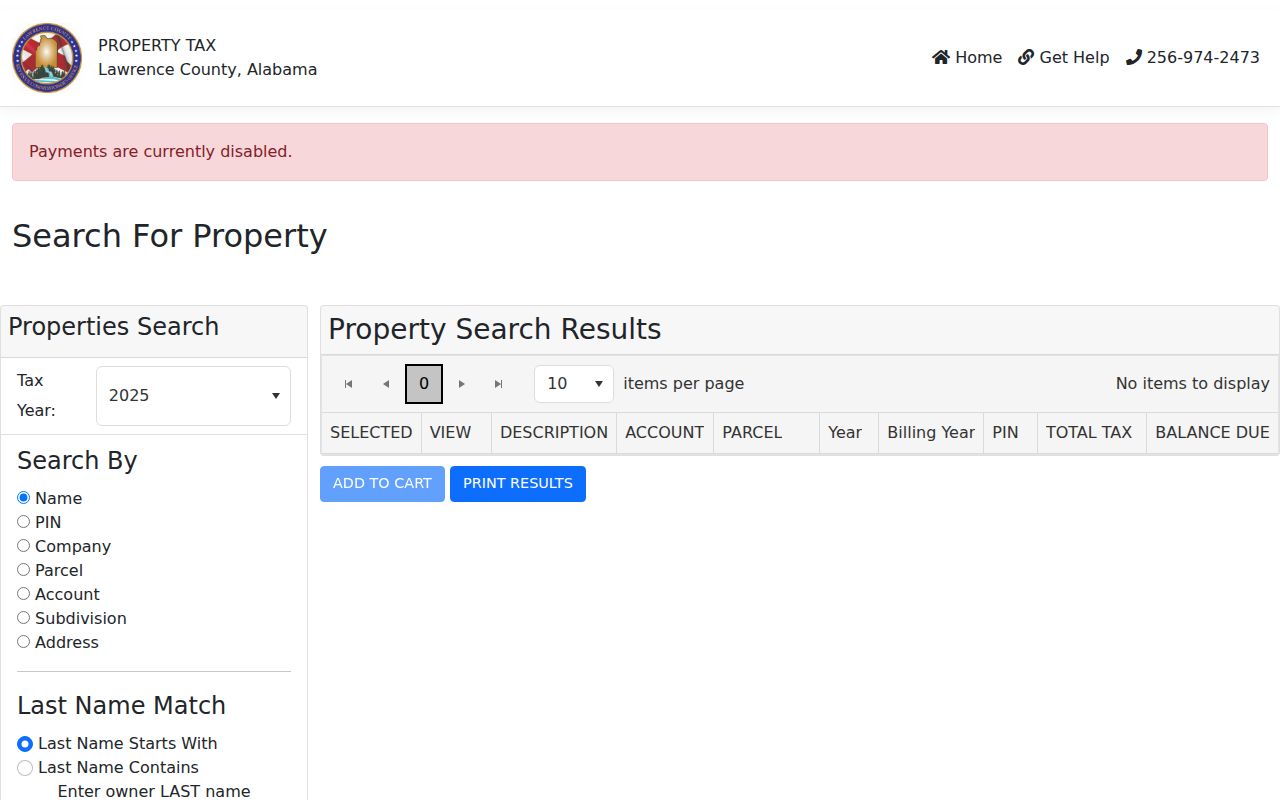
Each search mode leads to the same parcel card. The card's source date and identifiers are what make a current owner result testable rather than a guess.
Confirm Lawrence County's Current Owner
A solid owner check compares the assessment roll with the deed recorded in Probate. The county states no fixed ownership-update lag or online deed cutoff. So check the dates rather than guessing.
- Record the AssuranceWeb owner string, PIN, legal text, tax year, and source date.
- Match the parcel in GIS and copy the deed book/page.
- Pull the latest deed through the Probate/ING land-record route.
- Compare the grantee and vesting language with the assessment roll.
- Ask Revenue/Appraisal to review any conflict.
- Owner of record
- The party carried on the official roll.
- Vesting
- The deed language stating how title is held.
- Registered agent
- The state filing contact for an entity, not proof of land ownership.
Lawrence Property Owners Can Lag
A deed, a GIS field, the assessment roll, and a permit closeout can all update on their own schedules. Note the portal date, tax year, and deed dates. A conflict deserves two questions. Ask Revenue when its owner field was last reviewed, and ask Probate whether a later conveyance exists.
Keep the dates. No official fixed Lawrence County update interval was found, so never substitute a guessed number of days.
Trusts and Lawrence Current Owners
Trustee-style owner strings appear often on the roll. Preserve the role words and the initials. They show the capacity in which a name appears. A mailing address outside the county reveals nothing about occupancy and never exposes every beneficial interest. Alabama's Secretary of State entity inquiry can identify a company's state filing and its registered agent, but that record does not convey land. For an estate, a probate order may explain who holds authority, while the deed itself remains the vesting record.
Resolve Lawrence Owner Conflicts
Mapping/Appraisal sorts out parcel and roll discrepancies. Bring the address, the PIN or PPIN, the formatted parcel ID, the legal text, the deed book and page, and a clear description of the mismatch. Chief Appraiser Brandy Cummings can be reached at 256-974-2457, and the office sits at the courthouse property-office address, 14451 Market Street in Moulton.
Probate serves as the county's recorder. Its ING route works through an account or document-payment path, and no current image fee is posted, so ask for a quote before ordering. Confirm whether inspection, an ordinary copy, or a certified copy is what you actually need.
Keep each answer in its own lane. Revenue explains the assessment owner field, exemptions, and the tax account. Mapping/Appraisal explains a parcel key, a split, a merger, or a mapped mismatch. Probate locates the deed naming the grantee. A court order, an estate file, or an unrecorded event may add context, but none of it should be squeezed into a claim that one portal is simply wrong. Write down who answered, the date, and the exact field reviewed.
Lawrence Owner Search Failures
A name search fails for familiar reasons. The roll may store a trust, a business, a spouse, a representative, initials, or a different spelling. Switch to the address or subdivision search. Then carry the parcel key back to the owner record. An address may be missing. Try the legal description and the GIS identifiers instead of widening the search to unrelated people. Rural parcels often carry mailing and situs text that look nothing alike. The mailing address exists for notices. The situs field marks where the land lies. A mobile-home or appendage description by itself does not show how the improvement is assessed. It may be real property, personal property, or on another account. Revenue answers that classification question from the card. Subdivision searches help in a common case. A street number changed or never made it onto the parcel card. Copy the subdivision name and lot text exactly as stored. Then compare it with the deed or the recorded plat. For acreage tracts, section, township, range, and adjoining-owner clues can beat a road name. Keep the failed query in your notes. The final owner conclusion then shows why a different route was used.
Request a Lawrence Owner Review
Target the right office before anything else. A Revenue or Appraisal request should pin down the parcel address, the PIN or PPIN, the formatted parcel ID, the account, the tax years involved, and the exact owner mismatch. Ask for the assessment card, the owner field, the legal description, and any update or last-reviewed date. If Mapping or Appraisal controls the disputed field, request a handoff there rather than blasting a broad demand to every county office at once.
Alabama Code §36-12-40 gives Alabama residents the right to inspect and copy public writings, subject to statutory exceptions. Statewide guidance sets no universal response deadline. So spell out the record you want, your preferred delivery method, and whether an ordinary or certified copy will do. Request acknowledgment and a cost estimate up front. That discipline keeps the request anchored to the current property owner and steers clear of unrelated personal data.
Contact a Lawrence Property Owner
The roll's mailing address is where official notices go. That makes it the best public contact clue for a property matter, even when it differs from the situs address. Alabama's public-record right still bends to exceptions, redaction, identity rules, and portal terms. Ask only for records tied to a lawful property purpose.
The full address-to-record method appears in the Lawrence County ownership lookup. A title dispute or pending purchase may still call for professional title work.
Copy the mailing address exactly as the roll displays it. Keep any care-of line or trustee label intact. Never swap in the situs address or assume the recipient lives on the parcel. A returned letter does not change the owner field. Recheck the source date and the latest deed, then ask Revenue whether a newer official mailing record exists.
Entity ownership demands the same restraint. The Alabama Secretary of State inquiry can search an entity by name, number, officer, agent, incorporator, or reservation and registration ID. A registered agent accepts entity notices, but the agent is not automatically the landowner. Match the exact entity name to the deed grantee before using its state filing as a contact route.
Capacity matters with trusts and estates. A trustee or personal representative can sign for the named owner without holding the property individually. Read the deed's vesting language and any relevant public probate order. A death certificate supplies chronology and relationship evidence under Alabama access rules. It does not transfer title on its own.
Keep the effort proportionate to the issue. A boundary notice, purchase inquiry, easement question, or estate matter may justify writing to the roll address. None of it justifies assuming the owner lives there. State the parcel and your reason for contact in plain terms. Where notice carries formal requirements, get advice on the required method rather than treating a tax-mail address as guaranteed service.
Found a current owner card that looks wrong? Preserve the screen and your access date before asking for a correction. Include the deed reference and legal description. Staff should not overwrite a field on a listing or a verbal claim alone. The maintained roll and the recorded instrument together create an auditable review path.
Lawful use. A public mailing address may be used for legitimate property communication. Never use current-owner information to stalk, harass, intimidate, or harm anyone.